Elijah
Elijah stands as one of the most commanding and influential figures in the biblical record, a prophet whose life and actions shaped not only the religious history of ancient Israel but also the later development of Christian thought and memory. His story unfolds during a critical period in the ninth century BCE, a time when the Kingdom of Israel was politically unstable, religiously divided, and deeply influenced by surrounding cultures. Although Elijah lived centuries before the emergence of Christianity, his role within the Hebrew Scriptures placed him firmly within the foundation upon which Christian history was later built.
Elijah appears in the biblical narrative during the reign of King Ahab of Israel, who ruled approximately from 874 to 853 BCE. This period was marked by significant political alliances and religious tension. Ahab’s marriage to Jezebel, a Phoenician princess from Sidon, introduced strong foreign religious influences into Israel. Jezebel actively promoted the worship of Baal, a Canaanite storm and fertility god, and supported prophets dedicated to this cult. As a result, traditional worship of the God of Israel faced suppression, and many prophets loyal to Israel’s covenantal faith were persecuted. It is within this context that Elijah emerges, described simply as “Elijah the Tishbite, from Tishbe in Gilead,” a brief introduction that underscores his sudden and dramatic entrance into history.
Elijah’s earliest recorded action is a direct confrontation with King Ahab, in which he announces a prolonged drought as a judgment upon the land. According to the biblical account in the First Book of Kings, this drought would last for several years and would only end at Elijah’s word. In the ancient Near East, control over rain and fertility was commonly associated with deities like Baal, making the drought not only an environmental crisis but also a direct challenge to Baal’s supposed power. Historically, such a declaration placed Elijah in immediate danger, forcing him into periods of concealment in remote regions such as the Wadi Cherith and later in the Phoenician town of Zarephath. These locations reflect the broader geographical and cultural world of the eastern Mediterranean, where Israel’s borders intersected with foreign lands and influences.
One of the most significant episodes in Elijah’s life, both historically and within Christian memory, is the confrontation on Mount Carmel. This event, traditionally dated to the middle of Ahab’s reign, brought together Elijah and the prophets of Baal in a public contest to determine whose deity truly held authority. The biblical account in 1 Kings 18 describes this encounter as taking place before the people of Israel, highlighting the communal and national stakes involved. Elijah’s actions on Mount Carmel culminated in the restoration of rain to the land, symbolizing the reestablishment of divine favor. Historically, this episode reinforced the idea of prophetic authority as a force capable of confronting royal power and reshaping national religious identity.
Following Mount Carmel, Elijah’s story takes on a more personal and human dimension. Despite his public triumph, he fled into the wilderness after Jezebel threatened his life. His journey southward into the desert and eventually to Mount Horeb, also known as Sinai, connects his story directly to earlier foundational moments in Israel’s history. Mount Horeb was traditionally associated with Moses and the giving of the Law, and Elijah’s presence there situates him within a long line of covenantal figures. The biblical narrative describes Elijah encountering God not through dramatic signs like wind or fire, but through a quiet and subtle presence. While later Christian tradition would reflect deeply on this moment, its historical importance lies in how it reinforced the prophetic role as one shaped by endurance, obedience, and continuity with Israel’s sacred past.
Elijah’s later ministry included his involvement in political justice, most notably in the case of Naboth’s vineyard. When King Ahab sought to seize Naboth’s ancestral land, Jezebel orchestrated false charges leading to Naboth’s execution. Elijah confronted Ahab directly, delivering a message of judgment against the royal house. This episode reflects the ancient Israelite understanding that kings were subject to moral and covenantal law, not above it. Historically, such narratives reinforced the idea that prophets served as guardians of justice and accountability within society, a theme that would later resonate strongly within Christian interpretations of moral authority.
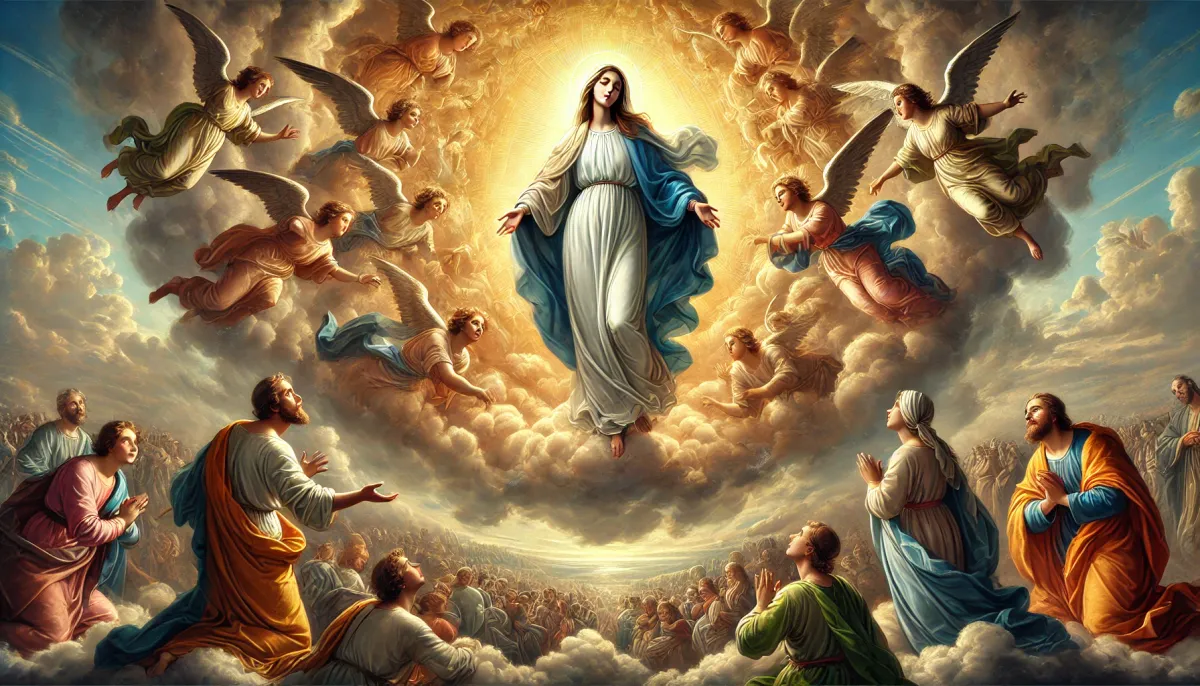
The conclusion of Elijah’s earthly life is among the most distinctive in the biblical record. According to 2 Kings 2, Elijah did not die in the ordinary sense but was taken up into heaven in a whirlwind, accompanied by a chariot and horses of fire. This event occurred east of the Jordan River, near the end of Elijah’s ministry, and was witnessed by his successor, Elisha. The manner of Elijah’s departure set him apart from nearly all other biblical figures and contributed significantly to his enduring historical and religious legacy. Within Jewish tradition, Elijah came to be viewed as a figure who would return in the future. This expectation crossed into early Christian thought and played a meaningful role in shaping how Christians understood the continuity between the Hebrew Scriptures and the New Testament.
Elijah’s importance in Christian history becomes especially evident in the way he is referenced within the New Testament. Centuries after his lifetime, Elijah appears alongside Moses during the Transfiguration of Jesus, an event described in the Gospels of Matthew, Mark, and Luke. This moment, set on a mountain and witnessed by select disciples, visually and symbolically connected Jesus with the central figures of Israel’s sacred past. From a historical perspective, Elijah’s presence in this scene reflects how early Christians understood Jesus’ ministry as emerging from, rather than replacing, the prophetic tradition of Israel. Elijah represented the line of the prophets, just as Moses represented the Law, and together they formed a bridge between earlier sacred history and the emerging Christian movement.
In addition to the Transfiguration, the figure of Elijah appears in discussions surrounding John the Baptist. The Gospels record that many people in first-century Judea associated John with Elijah, drawing on longstanding expectations rooted in the prophetic book of Malachi, which spoke of Elijah’s return before a great moment of divine action. While the New Testament presents John the Baptist as fulfilling this role in a figurative or preparatory sense, the historical significance lies in how deeply Elijah’s legacy was embedded in the religious imagination of the time. Early Christians inherited these expectations and incorporated them into their understanding of how Christianity fit within the broader story of Israel.
The influence of Elijah extended beyond the New Testament era into the early centuries of Christian thought. Early Christian writers frequently referred to Elijah as a model of prophetic faithfulness, perseverance under persecution, and divine mission. His life, preserved in the Hebrew Scriptures and embraced by Christian communities as sacred history, offered a shared narrative that connected Christians to the ancient roots of their faith. Elijah’s story was read not as an isolated legend but as a foundational account that helped define the role of prophets, the relationship between divine authority and political power, and the continuity of God’s actions across generations.
Historically, Elijah’s significance within Christianity rests not on later theological interpretation but on his place within the narrative framework that Christianity inherited from Judaism. The early Christian movement did not emerge in isolation; it developed within a world shaped by the Law, the Prophets, and the Writings of the Hebrew Scriptures. Elijah’s life provided a concrete example of how prophetic figures functioned within this world, how they confronted injustice, and how they preserved religious identity during times of crisis.
Elijah’s enduring importance in Christian history lies in the way his story helped early Christians understand their faith as part of a much older and ongoing story. His presence in key New Testament moments, his role in shaping expectations about divine intervention, and his portrayal as a faithful servant operating within real historical circumstances all contributed to his lasting influence. Through Elijah, Christian readers encounter a figure who stands at the crossroads of ancient Israelite history and the early Christian understanding of God’s work in the world, making his life a meaningful and enduring chapter in the broader story of Christianity.
DO YOU ENJOY OUR ARTICLES?
Invite your friends and family to visit our website by emailing them a link or posting about us on your social media. We truly appreciate your support.